Planning EV Charging for a Commercial Parking Lot
Start with a site assessment
Before you order any hardware, look at the parking lot itself. Count the total spaces and note how they are arranged. A long, narrow lot may need a different charger layout than a square one. Also check where the existing electrical service enters the building. The distance from the main panel to the farthest parking space matters because long cable runs add cost and voltage drop.
Make a simple map of the lot. Mark the locations of existing conduits, light poles, and any underground utilities. This map will help you decide where to place charging stations so they are convenient for drivers and practical for the electrician to wire. A site assessment done early can save time and money later.
Understand your parking capacity and tenant demand
Not every parking space needs a charger right away. A good rule is to plan for the future but install in phases. Start by estimating how many drivers will actually use the chargers. If the lot serves office workers who park all day, you may need fewer chargers than a retail lot where people come and go. Talk to tenants or property managers to get a sense of current electric vehicle ownership and interest.
Parking capacity also affects charger placement. If you have a large lot with 200 spaces, you might put a cluster of chargers near the entrance where they are easy to see and access. For a smaller lot, a single dual-port charger may be enough. The key is to match the number of chargers to actual use, not to fill every space with a charger that sits idle.
Check your utility service and load profile
Your existing electrical service may not have enough spare capacity for a bank of fast chargers. Contact the utility company early to discuss load studies and service upgrades. They can tell you the maximum power available and whether you need a new transformer or a dedicated meter. This step often takes weeks, so start it as soon as you have a rough plan.

The load profile of the building matters too. If the parking lot is used mostly during business hours, the chargers will add load when the building is already drawing power for lights, HVAC, and equipment. That could push the total demand over the service rating. A qualified electrician can calculate the existing load and recommend whether to add a separate service for the chargers or install load management software that shares power among chargers without exceeding the limit.
Choose between networked and standalone chargers
Networked charging stations connect to the internet and let you monitor usage, set pricing, and control access remotely. They are more expensive upfront but give you data on who is charging and when. Standalone chargers are simpler and cheaper, but you have to manage billing and access manually. For a commercial lot where you want to track usage or charge for electricity, networked units are usually worth the extra cost.
Access control is another consideration. Some chargers work with RFID cards, mobile apps, or license plate recognition. Think about who will use the lot. If it is a private lot for employees only, RFID cards may be simplest. If the lot is open to the public, a mobile app with payment integration might be better. The choice affects both user experience and your administrative workload.
Plan the electrical infrastructure
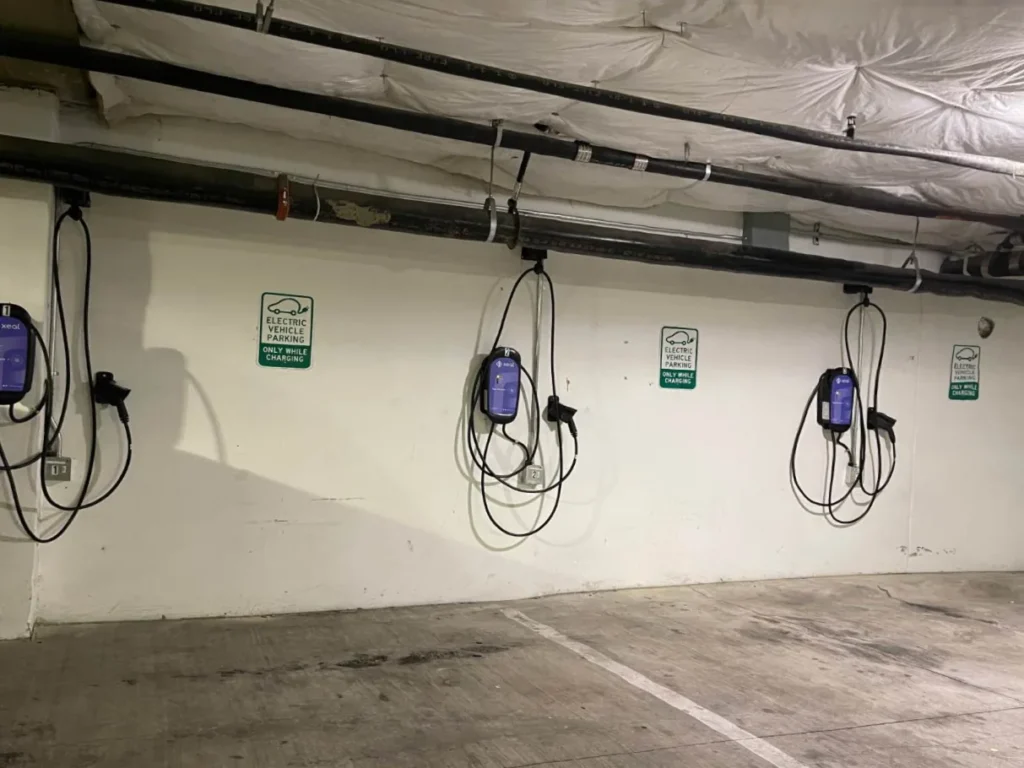
Chargers need dedicated circuits, conduit, and often a new subpanel. The work involves running conduit from the main panel to each charger location, pulling the right gauge wire, and installing ground fault protection. This is where a professional electrician is essential. The installation must meet local codes and the National Electrical Code, which has specific requirements for EV charging equipment.
One thing to watch is the number of chargers on a single circuit. Some chargers can share a circuit if they have built-in load balancing, but most need their own breaker. Overloading a circuit can trip breakers and damage equipment. A qualified electrician will calculate the load correctly and size the conductors and overcurrent protection accordingly. For more information on commercial EV charging installations, you can visit woodingelectric.com for guidance from a Bay Area electrical contractor.
Consider future expansion
Install extra conduit and spare capacity in the panel now, even if you only put in a few chargers today. Adding conduit later means digging up the parking lot, which is expensive and disruptive. Running extra wire and leaving space in the panel for future breakers is cheap insurance. The same goes for the data network. If you plan to use networked chargers, run Ethernet or conduit for fiber to each charger location now, even if the chargers themselves come later.
Think about signage and parking management
EV charging spaces need clear signage so drivers know they are for charging only. Some lots also need rules about how long a car can stay after it finishes charging. Idle fees can help keep spaces available for others. Decide whether you will enforce time limits and how. Many networked chargers can automatically charge idle fees after a grace period.
Also think about accessibility. The Americans with Disabilities Act (ADA) may require accessible charging spaces with enough room for a wheelchair van. Check local codes for the number of accessible spaces needed and their dimensions. Planning for this early avoids retrofitting later.
Budget for ongoing costs
Chargers are not a one-time purchase. You will pay for electricity, network fees if you use a service, and occasional maintenance. Some charging networks charge a monthly subscription per port. Others take a percentage of the revenue. Compare these costs against what you plan to charge drivers. If you offer free charging as an amenity, factor the electricity cost into your operating budget.
Maintenance includes software updates, cleaning the units, and replacing worn cables. Plan for a small annual reserve for repairs. Most chargers have a warranty of three to five years, but after that, you may need to replace parts or the whole unit.

Work with a qualified electrician early
The electrical work is the backbone of any EV charging installation. A licensed electrician with experience in commercial EV charging can help you choose the right equipment, design the layout, and handle the utility coordination. They can also spot potential issues like insufficient conduit size or load imbalances that a general contractor might miss. If you are in the Bay Area, woodingelectric.com is a resource for finding a qualified installer who understands local codes and utility requirements.
Do not try to cut corners on the electrical side. A poor installation can lead to tripped breakers, slow charging, or even fire hazards. Spend the time and money upfront to get it right, and the chargers will serve your tenants or customers reliably for years.